
As leaders, we have more productivity data at our fingertips than ever before. But many organizations still struggle with missed deadlines, employee burnout, uneven workloads, and operational inefficiencies.
Why?
Because knowing the outcome isn’t the same as understanding what caused it.
A delayed project tells us something went wrong. A spike in turnover tells us people are under pressure. Declining productivity signals that performance is suffering. But these metrics rarely explain the underlying conditions that created those outcomes in the first place.
That’s the gap many organizations face today.
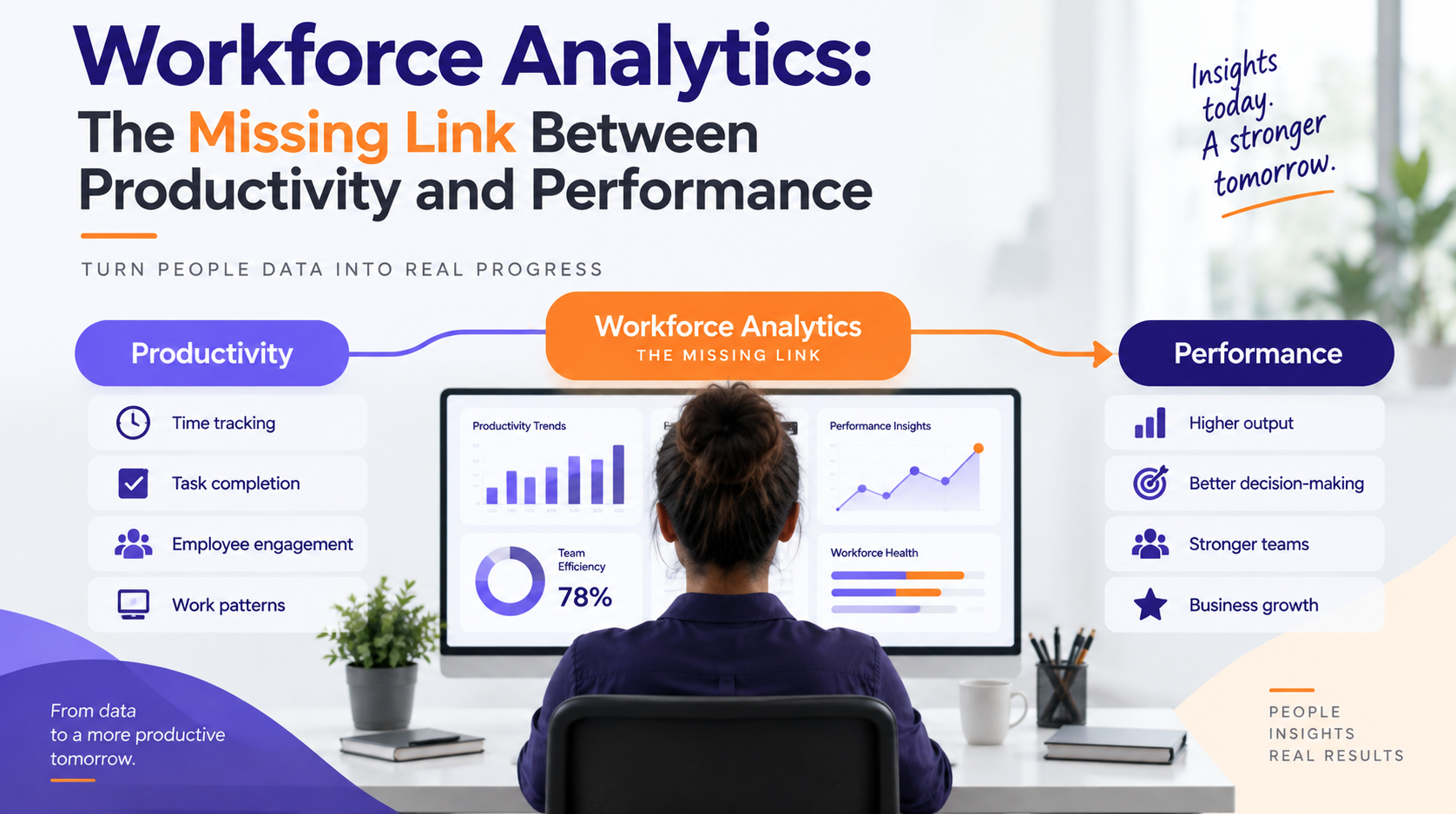
Workforce analytics helps close that gap by giving leaders greater insight into the factors affecting workforce productivity and business performance.
Key Takeaways
- Productivity problems are often operational problems. Missed deadlines or declining performance may be symptoms of workload imbalances, excessive meetings, context switching, or workflow bottlenecks—not simply a lack of employee effort.
- Traditional productivity metrics tell you what happened, not why. Hours worked, tasks completed, utilization, and delivery timelines provide outcomes but often lack the context behind them.
- Workforce analytics provides visibility into how work actually happens. It can reveal patterns in focus time, workload distribution, collaboration, capacity, and operational bottlenecks.
- Better visibility enables better workforce decisions. Leaders can use workforce data to improve staffing, resource allocation, capacity planning, and operational planning rather than relying on assumptions.
- Workforce analytics isn’t about monitoring employees—it’s about understanding performance. It connects workforce activity with business outcomes so leaders can make evidence-based decisions.
What is Workforce Analytics?
Workforce analytics is a practice of collecting and analyzing workforce data to understand how people, teams, and processes contribute to business performance. It gives leaders greater visibility into different areas of business—productivity, workload distribution, capacity, collaboration patterns, and operational efficiency.
What Workforce Analytics Actually Measures
Focus Time
Workforce analytics software can help leaders understand whether employees have enough uninterrupted time for deep, focused work. When focus time is consistently fragmented by meetings, notifications, and context switching, productivity inevitably suffers. Identifying these patterns makes it easier to create an environment where teams can perform at their best.
Workload Distribution
Workforce analytics provides better visibility into workload distribution. Leaders can quickly identify which teams are operating at capacity and which have bandwidth available. This helps improve staffing decisions, balance workloads more effectively, and reduce the risk of burnout.
Operational Efficiency
Workforce analytics software can reveal where work is slowing down, where projects are getting stuck, and where dependencies are delaying progress. Instead of reacting to delays after they occur, organizations can address these issues before they begin affecting delivery timelines.
Collaboration Patterns
Workforce analytics helps leaders understand meeting volume, communication load, and cross-functional dependencies across teams. For organizations managing remote, hybrid, or globally distributed workforces, this visibility can be invaluable. It helps them improve coordination and reduce unnecessary friction.
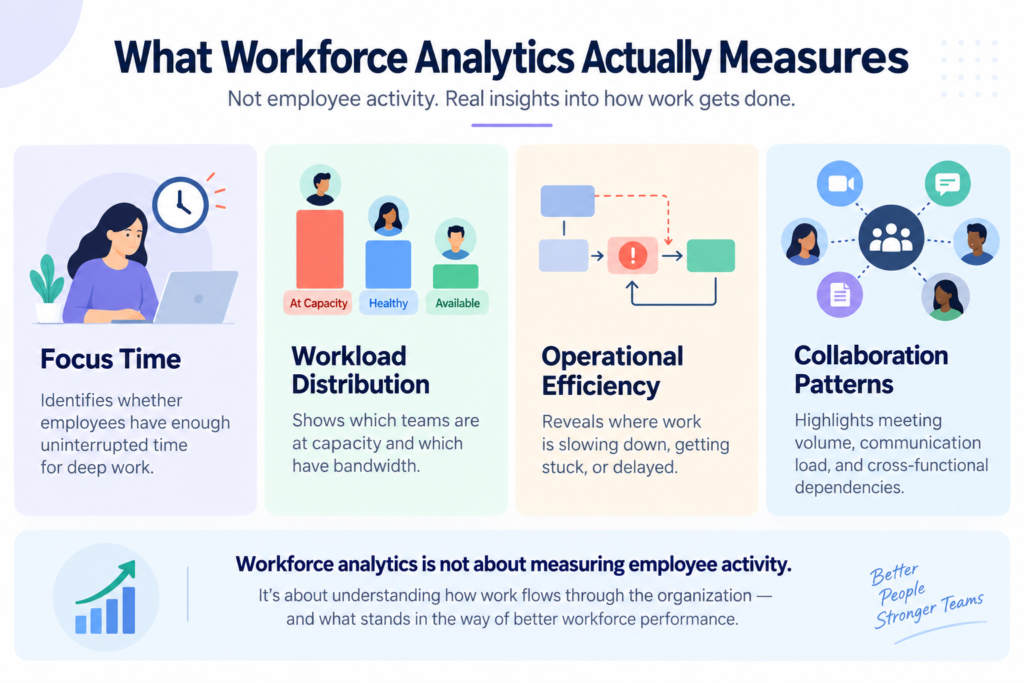
Ultimately, workforce analytics is not about measuring employee activity. It’s about giving leaders the insights they need to understand how work flows through the organization—and what stands in the way of better workforce performance.
Why Traditional Metrics Fall Short
One of the biggest limitations of traditional productivity metrics is that they focus on outputs. Hours worked. Tasks completed. Utilization rates. Delivery timelines.
These metrics can provide a snapshot of employee productivity, but they don’t explain what is helping or preventing teams from achieving results. This is where productivity analytics can provide greater context, helping leaders understand the conditions behind those outcomes.
A team can be working long hours and still struggle to make meaningful progress. Another team may appear highly utilized while quietly moving toward burnout.
The metrics themselves aren’t wrong. They’re simply incomplete.
To improve productivity, leaders need visibility into the factors affecting workforce productivity and business performance every day. That’s the role workforce analytics plays. It helps organizations move beyond measuring outcomes and begin understanding the operational realities behind them.
How Most Companies Misdiagnose Their Productivity Problem
When productivity starts to decline, most organizations follow a familiar path.
They begin measuring employee performance more closely. They look for underperforming teams, missed targets, or gaps in accountability. The assumption is simple: if productivity is falling, employees must not be performing at their best.
But that’s often where the diagnosis goes wrong.
Poor performance is usually a symptom, not the root cause.
In my experience, productivity challenges rarely stem from a lack of effort. More often, they’re the result of operational issues that remain hidden beneath the surface.
For example:
- Workloads may be unevenly distributed across teams.
- Employees may be spending too much time in meetings and too little time doing focused work.
- Constant context switching may be reducing operational efficiency.
- Collaboration bottlenecks may be slowing decision-making.
- Leaders may simply lack visibility into how work is actually happening.
When organizations focus only on performance outcomes, they risk treating the symptoms instead of addressing the underlying problem.
Before asking whether employees are productive enough, leaders should ask a different question:
Do we understand what’s preventing them from being productive in the first place?
Without that visibility, improving productivity becomes little more than guesswork.
Three Questions Every Leader Should Answer
1. Do Our Teams Have Enough Uninterrupted Time to Do Meaningful Work?
In today’s workplace, employees are constantly pulled in different directions. Meetings, emails, chat notifications, and ad hoc requests can consume a significant portion of the workday.
This matters because deep work drives meaningful outcomes. Whether it’s writing code, solving customer problems, developing strategy, or creating content, high-value work requires sustained focus.
Leaders should understand how much uninterrupted time their teams actually have and whether frequent interruptions are affecting productivity. Workforce analytics can reveal patterns related to focus time, meeting load, and context switching, helping organizations create an environment where employees can perform at their best.
2. Where are Workload Imbalances Creating Risk?
Not all productivity challenges are caused by a lack of effort. Sometimes the issue is simply that work is not distributed effectively.
While some teams may be operating at full capacity, others may have available bandwidth. Over time, these imbalances can lead to burnout, declining morale, missed deadlines, and increased turnover.
Leaders need visibility into how work is distributed across teams, departments, and projects. Workforce analytics helps identify areas of overload and underutilization, enabling more informed staffing, scheduling, and resource allocation decisions.
3. What Operational Barriers Are Preventing Teams from Performing at Their Best?
When projects fall behind schedule, the immediate assumption is often that teams need to work harder.
In reality, the problem may lie elsewhere.
Approval bottlenecks, excessive meetings, inefficient processes, communication gaps, or inter-team dependencies can slow progress even when employees are working at full capacity.
Leaders should be able to identify where work is getting stuck and what obstacles are preventing teams from moving forward efficiently. Workforce analytics provides visibility into workflow patterns and operational bottlenecks, making it easier to address issues before they begin affecting delivery and business performance.
The answers to these questions shouldn’t come from assumptions or intuition alone. They should come from data.
Workforce analytics gives leaders the visibility they need to understand how work actually happens, allowing them to make decisions based on evidence rather than guesswork.
Why Workforce Analytics Is Becoming a Leadership Priority
For years, workforce analytics was viewed primarily as an HR reporting tool. Today, that perception is changing.
As organizations become more distributed, digital, and data-driven, leaders need greater visibility into how work happens across teams. Workforce analytics helps provide that visibility, making it easier to connect workforce activity with business outcomes.
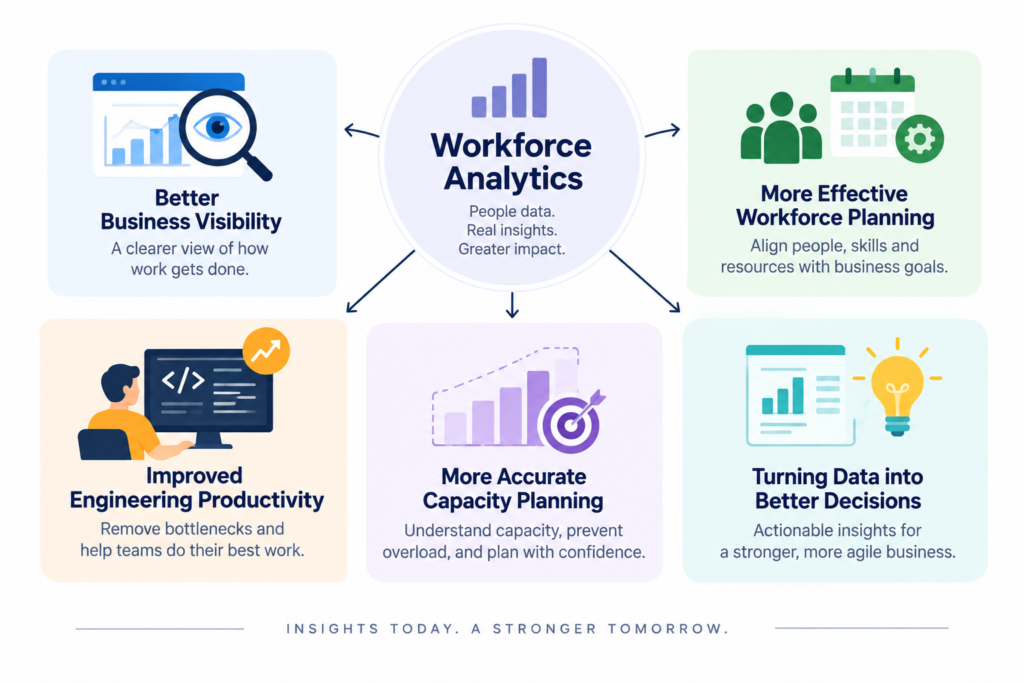
Better Business Visibility
Leaders are often expected to make critical decisions with limited information. They can see financial results, project outcomes, and performance metrics, but they may not fully understand the workforce conditions driving those results.
Workforce analytics helps bridge that gap. It provides insight into how teams work, where productivity is being lost, and what factors are influencing performance. This allows leaders to identify risks earlier and make more informed business decisions.
More Effective Workforce Planning
Operational planning is only as good as the data behind it.
When leaders lack visibility into workloads, resource allocation, and team capacity, planning often becomes reactive. Projects become delayed, resources are stretched too thin, and teams struggle to keep up with demand.
Workforce analytics provides a clearer picture of how resources are being utilized across the organization. This enables leaders to forecast demand more accurately, improve workforce planning, allocate resources more effectively, and plan with greater confidence.
Improved Engineering Productivity
For technology organizations, productivity isn’t simply about working more hours. It’s about creating the conditions that allow engineers to do their best work.
Workforce analytics helps engineering leaders understand factors such as focus time, meeting load, collaboration patterns, and workflow bottlenecks. By identifying what is slowing teams down, organizations can improve delivery speed, reduce unnecessary friction, and create a more productive work environment.
More Accurate Capacity Planning
Hiring decisions, capacity planning, staffing strategies, and workforce investments should be based on actual business needs rather than assumptions.
Workforce analytics helps leaders understand where capacity exists, where skills are needed, and where workloads may become unsustainable. This leads to more accurate workforce planning and helps organizations avoid both understaffing and overstaffing.
Turning Data Into Better Decisions
At its core, workforce analytics helps leaders move from intuition to evidence.
Instead of relying on assumptions about productivity, capacity, or performance, leaders gain access to data that reflects how work actually happens across the organization.
And when decisions are backed by evidence rather than guesswork, organizations are better positioned to improve productivity, support employees, and achieve stronger business outcomes.
Final Takeaway
Most organizations don’t have a shortage of productivity metrics.
What they often lack is visibility.
Visibility into how work flows through teams. Visibility into where time is being lost. Visibility into the factors that are helping or preventing employees from performing at their best.
Without that understanding, even the best productivity initiatives become little more than educated guesses.
Workforce analytics helps leaders connect workforce activity to business outcomes, providing the context needed to make better decisions.
After all, you cannot improve what you do not understand. And you cannot understand what you cannot see.
Ready to Gain Better Visibility Into Your Workforce?
Modern workforce analytics software helps organizations uncover productivity barriers, identify workload imbalances, improve capacity planning, and make more informed operational decisions.
Need to get articles like this written for you? Book a free 30-minute call to discuss your requirements.
Frequently Answered Questions
1. What is Workforce Analytics?
Workforce analytics is the process of collecting and analyzing workforce data to understand how work happens across an organization. It helps leaders identify trends related to productivity, workload distribution, collaboration, capacity, and operational efficiency so they can make more informed decisions.
2. How is workforce analytics different from traditional productivity metrics?
Traditional productivity metrics focus on outcomes such as hours worked, tasks completed, utilization rates, and project deadlines. Workforce analytics goes a step further by helping leaders understand the factors influencing those outcomes, including focus time, workload imbalances, collaboration patterns, and operational bottlenecks.
3. Can workforce analytics help reduce employee burnout?
Yes. Workforce analytics can identify early warning signs of burnout, such as excessive workloads, prolonged after-hours activity, meeting overload, and uneven work distribution. This allows leaders to address issues before they begin affecting employee well-being and performance.
4. How does workforce analytics improve workforce planning?
Workforce analytics provides visibility into team capacity, workload trends, resource utilization, and staffing requirements. This helps organizations make more accurate hiring, scheduling, and resource allocation decisions while avoiding both understaffing and overstaffing.
5. Is workforce analytics the same as employee monitoring?
No. Workforce analytics focuses on understanding work patterns, operational efficiency, and workforce trends rather than monitoring individual employees. Its primary goal is to help leaders improve processes, remove bottlenecks, and create better conditions for performance.
6. Why is workforce analytics becoming important for business leaders?
As organizations become more distributed and data-driven, leaders need greater visibility into how work impacts business outcomes. Workforce analytics helps connect workforce activity with productivity, performance, capacity planning, and operational efficiency, enabling leaders to make decisions based on evidence rather than assumptions.