
You’re skilled.
You’re experienced.
You know you can deliver real results.
So why does your visibility still feel unpredictable?
Leads come in when you host a webinar.
You promote your offer.
You might even close a few sales.
For a moment, it feels like things are working.
And then?
It goes quiet.
Momentum fades.
Discovery calls slow down.
Your inbox isn’t as active anymore.
So what happens next?
You start planning the next webinar.
You gear up for the next push.
And the cycle repeats.
Sound familiar?
You’re not alone. This is what most coaches do.
But you don’t have to follow them.
Think about it this way…
If you pour water into a bucket with holes, it looks full — as long as you keep pouring.
The moment you stop… it drains out.
That’s what’s happening with your marketing.
When you’re promoting heavily — running webinars, posting daily, launching something new — leads come in.
When you pause, visibility disappears.
Not because you’re lazy.
Not because your offer lacks value.
Not because you’re bad at marketing.
The real issue?
Your organic lead generation isn’t built on a system.
It’s built on effort.
And effort without structure creates spikes — not stability.
Let’s look at where things usually break down.
Table of Contents
7 Organic Lead Generation Flaws Behind Inconsistent Growth
None of these organic lead generation mistakes feel dramatic when you’re making them.
In fact, they often look like progress.
But small gaps compound. And when they do, visibility becomes unpredictable.
Let’s start with the foundation.
#1: Misidentifying Your Audience
Most coaches aren’t entirely sure who they’re speaking to.
So they default to “everyone.”
After all, the problem they solve feels universal.
More confidence.
Better health.
Stronger leadership.
More clients.
But when you speak to everyone, you connect with no one.
Your messaging becomes broad.
Safe.
Generic.
People read it.
They agree with it.
But they don’t feel understood.
Before you host another webinar…
Before you write another blog…
Before you post again on LinkedIn…
You need clarity on one thing:
Who exactly are you talking to?
For that, you need to identify the problem.
What exactly does your offer solve?
Not broadly.
Not philosophically.
Specifically.
What is the real, tangible struggle your product addresses?
Now ask yourself:
Who is facing this problem right now?
Need a practical example? Here’s one:
Let’s say you are a fitness coach.
You help people lose weight and build strength.
That sounds broad, right?
But “people who want to get fit” is not a target audience.
Now narrow it down.
Do you help:
- New mothers trying to regain strength after pregnancy?
- Busy corporate professionals with no time to cook?
- Women over 40 struggling with hormonal weight gain?
- Men preparing for a marathon?
Each of these groups has a completely different daily reality.
Different frustrations.
Different language.
Different priorities.
If you say, “I help people get fit,” your message blends in with thousands of others.
But if you say,
“I help busy corporate professionals build strength in under 30 minutes a day,”
Now it’s clear.
Now it feels specific.
Now someone can say, “That’s me.”
That’s your target audience.
The problem defines the person.
And the person defines the clarity of your message.
Without that clarity, your organic lead generation will always struggle.
Because visibility doesn’t grow from broad messaging.
It grows from relevance.
#2: Treating Webinars as a Strategy Instead of a Tool
Webinars are powerful.
They build trust quickly.
They allow you to teach.
They create urgency.
But they are not a visibility strategy.
They are a conversion tool.
When webinars become your primary source of leads, your visibility becomes event-based.
You’re visible during promotion.
Then you disappear.
Every launch feels like starting over.
Hosting webinars alone is like hosting a party.
You invite people. They show up.
You have great conversations.
But when the party ends… everyone goes home.
A strategy builds momentum.
A tool supports that momentum.
Webinars work best when they sit inside a system — not when they carry the entire system.
#3: Posting Randomly Instead of Following a Content Rhythm
Let me share something I see all the time.
A coach feels motivated one week.
She writes three LinkedIn posts.
Maybe even publishes a blog.
Engagement goes up.
Profile views increase.
Then client work gets busy.
She disappears for two weeks.
No posts.
No updates.
No visibility.
No organic lead generation.
When she comes back, it feels like she’s starting from scratch again.
That’s what random posting does.
It creates short bursts of attention — but no momentum.
And from the audience’s perspective, it feels inconsistent.
Overtime it breaks trust.
Consistency doesn’t mean daily posting.
It means having a rhythm.
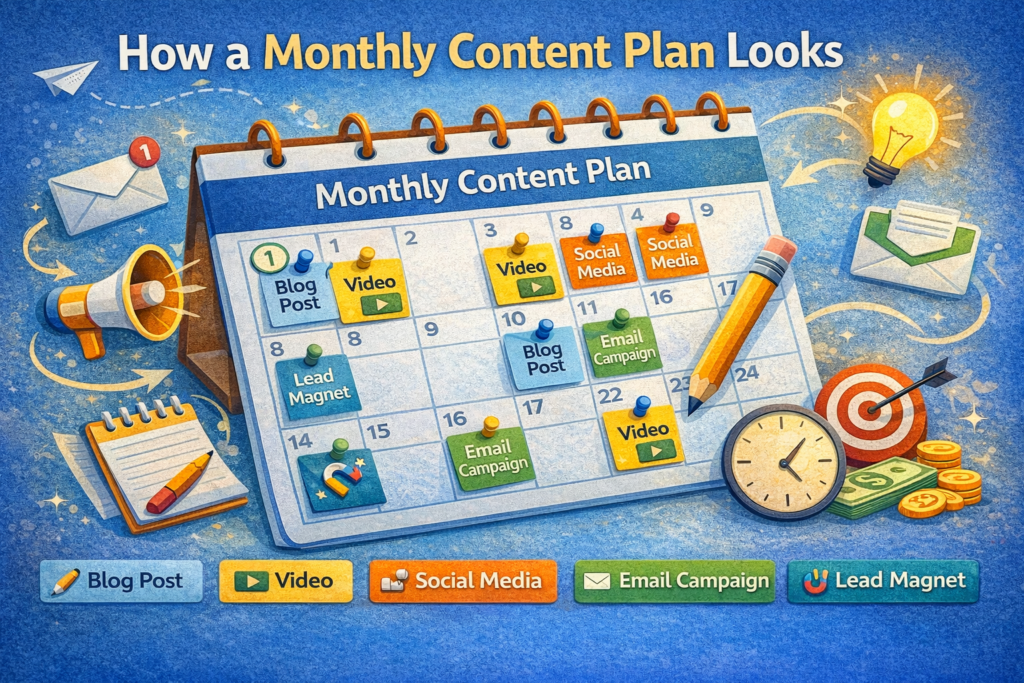
A clear monthly focus.
Defined themes.
Content that connects.
Structure compounds. Random effort resets.
#4: Creating Content Without Search Intent
You can plan your month perfectly.
You can post consistently.
You can show up every week.
And still see very little traffic.
Why?
Because you are creating content without any search intent.
The key here is to find out what your audience is already searching for.
Then you create content to match those needs.
Your content has to align with their search intent.
Otherwise, it won’t bring traffic.
And if it doesn’t bring traffic, it can’t bring leads.
Imagine you write a blog titled:
“My Thoughts on Coaching This Week.”
It might be insightful.
It might even be well-written.
But nobody is searching for that.
Now compare that to:
“How to Get High-Ticket Clients as a Business Coach.”
That’s specific.
That’s searchable.
That’s intent-driven.
One depends on people stumbling across it.
The other meets people exactly when they’re looking for help.
That’s powerful.
Because now you’re not chasing attention.
People are finding you.
But discovery alone doesn’t build trust.
And trust is what turns traffic into leads.
That’s where LinkedIn comes in.
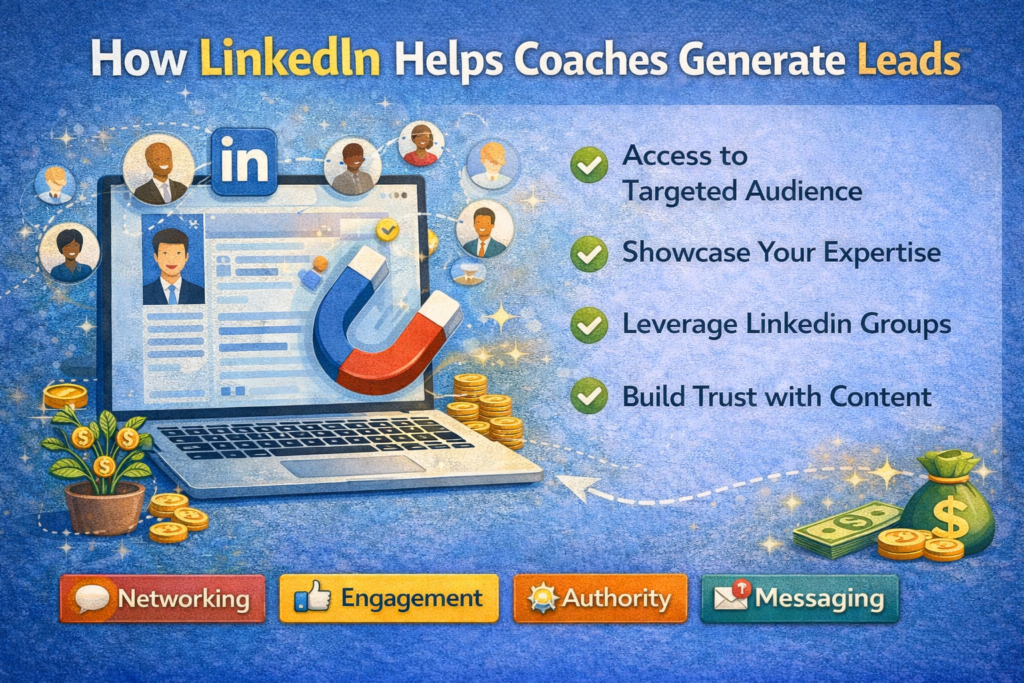
#5: Ignoring LinkedIn as an Authority Engine
Your blog may attract traffic.
But LinkedIn builds familiarity.
When someone reads your blog, they check your profile.
If your LinkedIn feels inactive or inconsistent, trust weakens.
And trust converts traffic into leads.
Posting only during launches signals: “I show up when I’m selling.”
Posting consistently signals: “I’m here.”
Authority grows through visibility over time.
Organic lead generation depends on both discoverability and familiarity.
Let me give you a simple example.
Imagine a consultant who posts on LinkedIn only when she’s launching a new cohort.
For two weeks, she’s everywhere.
Posting daily.
Sharing testimonials.
Talking about her offer.
Engaging in comments.
Then the launch ends.
She disappears.
Three weeks later, she comes back with another announcement.
From her point of view, this makes sense.
But from her audience’s point of view, it feels like this:
She only shows up when she wants something.
Now compare that to a different approach.
Same consultant.
But this time, she posts twice a week — every week.
One post sharing an insight about her niche.
One post answering a common question her clients ask.
No heavy selling.
Just clarity.
Consistency.
Relevance.
Over time, something changes.
People start recognizing her name.
They understand what she stands for.
They see her thinking process.
So, when she eventually announces her program, it doesn’t feel sudden.
It feels natural.
Because she never disappeared.
#6: Failing to Engage with the Audience You Already Have
You’re publishing blogs on your website.
You’re becoming more consistent on LinkedIn.
Your visibility is slowly improving.
So you might wonder:
Isn’t that enough?
Why do I need to engage too?
Because visibility attracts attention.
But engagement builds trust.
And trust is what turns attention into action.
Think about it this way.
Imagine someone comments on your LinkedIn post.
They share their struggle.
They relate to what you wrote.
They ask a question.
And you don’t respond.
Or you reply with a quick “Thanks!”
That interaction ends there.
Now imagine a different response.
You reply thoughtfully.
You ask a follow-up question.
You acknowledge their specific situation.
Suddenly, it’s no longer a broadcast.
It’s a conversation.
And conversations create connection.
That person feels seen.
They’re more likely to:
- Visit your profile
- Read your content
- Join your email list
- Eventually book a call
Engagement isn’t about being everywhere.
It’s about showing people that you’re present.
When someone takes the time to interact with your content, they’re raising their hand.
If you don’t respond, you’re missing an opportunity to deepen the relationship.
Organic lead generation isn’t just about attracting new people.
It’s also about nurturing the ones who are already paying attention.
Because often, the next client you sign isn’t a stranger.
It’s someone who’s been quietly watching.
And engagement is what moves them from observer to buyer.
Engagement helps you build relationships.
But it does something else too.
It gives you feedback.
Every comment.
Every share.
Every click.
Every blog visit.
They’re signals.
They’re telling you something.
What topics resonate.
What questions people care about.
What language connects.
What falls flat.
Now imagine creating content for months… without ever looking at those signals.
You keep posting.
You keep writing.
You keep showing up.
But you don’t actually know what’s working.
That’s like driving with your eyes closed and hoping you’re moving in the right direction.
Organic lead generation isn’t just about creating content.
It’s about refining it.
#7: Not Tracking What’s Actually Working
You can publish four blogs a month.
You can post twice a week on LinkedIn.
You can engage consistently.
But if you’re not tracking:
- Which blog topics bring traffic
- Which posts generate profile visits
- Which content leads to inquiries
- Which calls-to-action convert
You’re guessing.
And guessing makes growth unpredictable.
Let’s look at a simple example.
Suppose you write two blog posts:
One on “How to Get High-Ticket Clients”
Another on “My Thoughts on Business Mindset”
After a month, you check performance.
The first blog brings steady search traffic.
The second barely gets visits.
Now you have data.
Instead of writing randomly next month, you double down on high-intent topics.
That’s how organic growth compounds.
Tracking doesn’t make marketing complicated.
It makes it intelligent.
Because when you know what works, you can repeat it.
And when you repeat what works, visibility stops feeling unpredictable.
And Then There’s Your Real Life
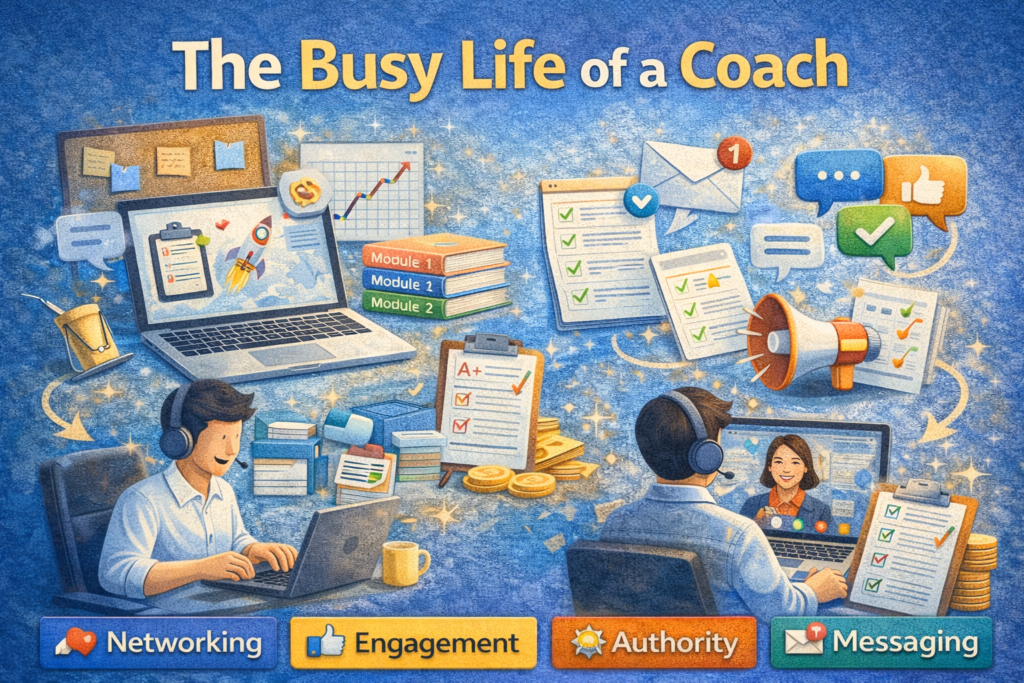
You’re not just a marketer.
You’re a coach.
You’re planning your next course.
Refining your modules.
Reviewing student assignments.
Replying to messages.
Jumping on mentoring calls.
Handling support queries.
Improving your offers.
Your day is already full.
Content becomes that thing you “should” do.
But it keeps getting pushed to next week.
Not because you don’t care.
But because you’re busy doing the actual work of serving clients.
And this is exactly why most coaches struggle with consistency.
Not because they lack ideas.
Not because they lack expertise.
But because they don’t have the time or mental space to turn content into a structured organic lead generation system.
Now imagine this instead.
Your blog posts are planned for the month.
SEO research is already done.
Your LinkedIn posts are scheduled.
Your website is updated regularly.
Your content connects to your webinar.
Your webinar connects to your email sequence.
And your email sequence continues selling your course — even when you’re not actively launching.
Leads come in.
They read your blogs.
They check your LinkedIn.
They join your list.
They receive automated emails that educate and build trust.
Some of them book calls.
Some of them buy your course.
Even when you’re focused on mentoring students.
That’s what an organic lead generation system does.
It doesn’t replace you.
It supports you.
It creates structure around your expertise.
So, you can focus on coaching.
While your content keeps working in the background.
Quietly.
Consistently.
Predictably.
And this is where most coaches realize something important.
They don’t need to “try harder.”
They need help implementing the system properly.
If You Want This Set Up for You
If you’re tired of guessing what to post…
If you don’t want to manage WordPress, SEO, and LinkedIn on your own…
If you want a “Done-for-you Content Marketing system” that keeps bringing organic leads — even between launches…
Let’s talk.
Book a Free Content Strategy call.
We’ll look at:
• Your current visibility
• Your offers
• Your content gaps
• And what a proper monthly system could look like for you
No pressure.
Just clarity.
And if it makes sense, we can build the organic lead generation system together.